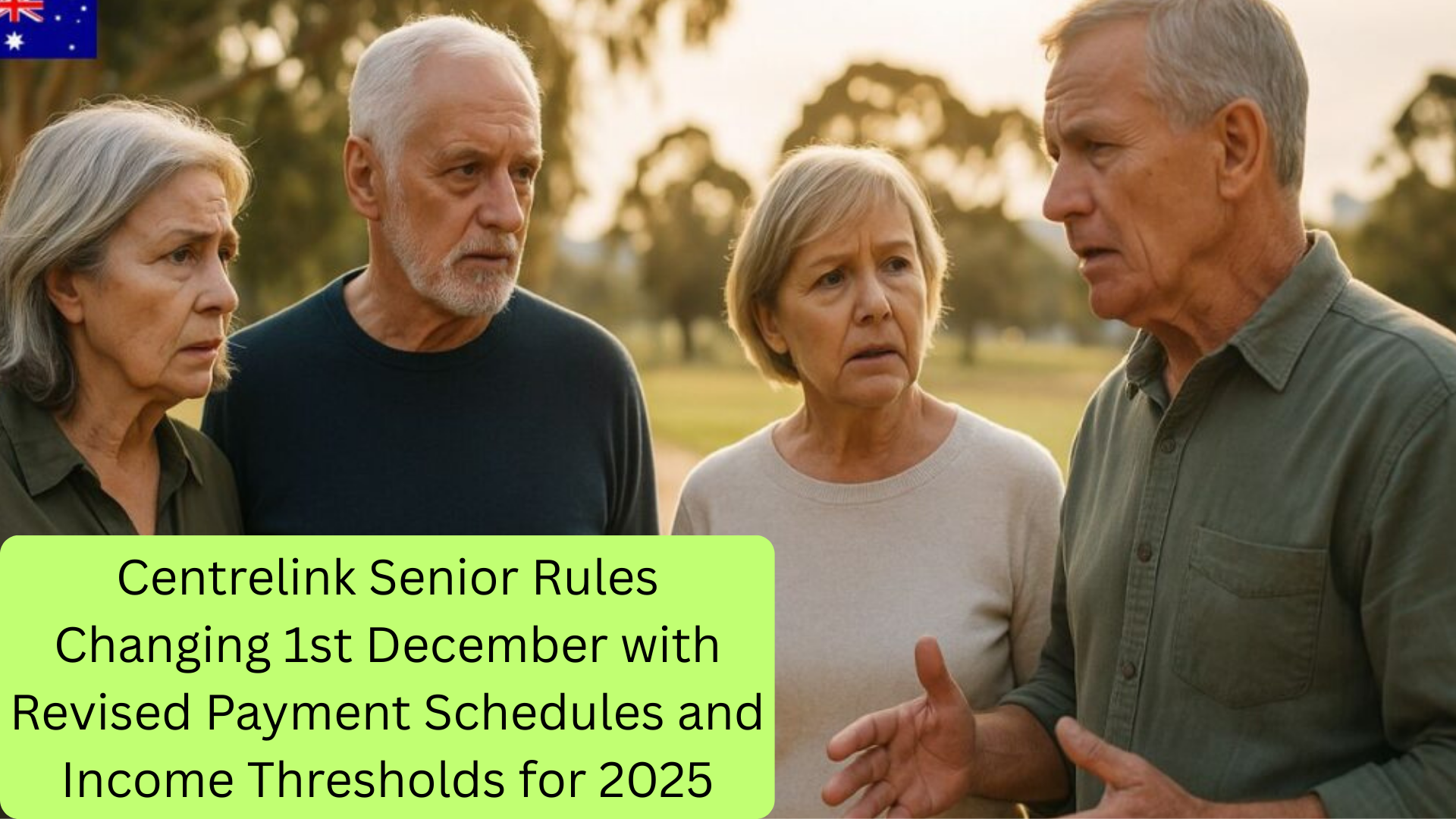
Imagine preparing your budget for the year ahead, only to discover that the very rules governing your income support are about to shift. Millions of Australian Seniors are now focused on December 1st, 2025, the date when significant Centrelink Senior Rules changes take effect. These changes are set to update both the operational Payment Schedules and the crucial Income Thresholds, influencing the financial landscape for older Australians across the country.
This comprehensive update is part of the government’s ongoing effort to modernize the social security system and ensure its longevity, particularly in light of an aging population and changing economic models. While regular indexation adjusts the payment amount, the Centrelink Senior Rules Changing 1st December focus on the criteria and timing of payments, which often have a deeper, structural impact on how Seniors plan their working life and retirement savings. The changes are designed to provide greater flexibility but also enforce stricter reporting where necessary.
Background: Why the Rules are Changing
The primary motivation behind the December 1st changes stems from a comprehensive review of the Age Pension and other senior entitlements within Australia. The review aimed to address two key issues: the complexity of the current system, particularly around reporting income from casual work, and the misalignment of some payment processes with modern banking schedules.
Specifically, the updated Income Thresholds for 2025 are being adjusted to better reflect the current employment market, where more Seniors are choosing to work part-time or casually beyond traditional retirement age. The goal is to provide a smoother pathway for combining the Age Pension with earned income without facing disproportionate penalty rates. Furthermore, updated Payment Schedules aim to improve service delivery and certainty for Centrelink recipients, utilizing the latest technology to ensure prompt delivery.
What’s New: Key Changes to Payment Schedules & Income Thresholds
The Centrelink Senior Rules Changing 1st December introduce several pivotal adjustments that all Age Pension recipients, Carer Payment recipients of pension age, and self-funded retirees utilizing the Commonwealth Seniors Health Card (CSHC) should be aware of.
Key changes commencing December 1st, 2025:
- Revised Income Thresholds for 2025: The income free area, before the pension starts to be reduced, has been increased by a substantial margin (specific figure below). This is designed to encourage Seniors to work without significantly reducing their pension.
- Pension Work Bonus Adjustments: The Pension Work Bonus scheme, which allows pensioners to earn income without it affecting their payment, will see an increased accrual rate, further incentivizing participation in the workforce. This is a critical factor for many working Seniors in Australia.
- Consolidated Payment Schedules: A review of payment dates has led to the consolidation of several minor payment streams onto a standardized fortnightly schedule for greater clarity and efficiency. Recipients will see less variation in payment timing.
- Mandatory Digital Reporting: For those utilizing the Work Bonus or earning casual income, the requirement for digital income reporting through the myGov application will become mandatory, replacing previous paper-based and manual reporting options to ensure real-time accuracy.
- Asset Test Threshold Adjustments: While the largest changes focus on income, there are also minor, positive adjustments to the asset test thresholds to account for increases in property values and superannuation balances across Australia.
The Human Angle: Flexibility and Certainty
For individual Seniors, these rule changes mean greater flexibility and less ambiguity when planning their financial future.
Ms. Penelope Cruz, a 66-year-old part-time library assistant in Melbourne, noted the relief provided by the updated Income Thresholds for 2025. “I love my job, but I’ve always had to carefully monitor my hours to avoid losing too much of my pension,” Ms. Cruz stated. “The increase in the income free area means I can take on an extra shift during busy periods without worrying about a huge clawback from Centrelink. It respects the fact that some Seniors want to, and need to, keep working.”
Mr. David Li, a 71-year-old Age Pension recipient, appreciated the stability offered by the revised Payment Schedules. “My bank statement used to look complicated with payments arriving on different days depending on the cycle. Knowing that everything will now arrive on a single, reliable date after December 1st makes budgeting much simpler,” Mr. Li commented. “For older Australians, certainty is everything.”
Official Statements and Expert Analysis
A spokesperson for Services Australia confirmed the importance of the changes, emphasizing the drive for modernization. “The Centrelink Senior Rules Changing 1st December are pivotal for making the Age Pension system more accessible and sustainable. We are simplifying the Payment Schedules and increasing the Income Thresholds for 2025 to better support the employment choices of Seniors,” the spokesperson said.
Dr. Marcus Tate, an expert in retirement economics and social security, views the move as fiscally responsible. “By raising the income free threshold, the government is making a clear investment in the skills and experience of older Australians. Our data shows that approximately 850,000 Seniors currently access the Work Bonus scheme, and this number is expected to jump by 15% following the December 1st changes,” Dr. Tate explained. “This targeted increase in the Income Thresholds for 2025 is economically smart; it raises workforce participation, reduces dependency, and generates tax revenue, all while providing a better deal for working Seniors.”
Comparison of Key Income Thresholds for 2025
The most significant change is the increase to the Income Free Area, which determines how much private income a single pensioner can earn fortnightly before their pension rate is affected.
| Income Component | Pre-December 1st, 2025 Rule (Fortnightly) | Revised Rule from December 1st, 2025 (Fortnightly) | Impact on Seniors |
|---|---|---|---|
| Single Pensioner Income Free Area | $204 | $240 | $36 more can be earned before reduction starts |
| Couple (Combined) Income Free Area | $360 | $420 | $60 more can be earned before reduction starts |
| Pension Work Bonus Accrual Rate | $300 per fortnight | $350 per fortnight | Faster accumulation of the Work Bonus credit limit |
Impact and What Readers Should Do
The Centrelink Senior Rules Changing 1st December require proactive management from Seniors who rely on the Age Pension and related benefits. While the increase in Income Thresholds for 2025 is positive, the shift to mandatory digital reporting for working pensioners requires immediate attention.
Action Step 1: Update Reporting Methods: If you are a working pensioner, ensure you have access to the Centrelink section of myGov and understand how to submit your income digitally. Manual reporting will be phased out rapidly for casual income earners after December 1st, 2025.
Action Step 2: Review Work Bonus Strategy: Given the increased accrual rate, assess your current work patterns. You may now be able to earn more before reducing your pension, making it beneficial to plan an additional shift or seasonal work. Consult the updated Centrelink Payment Schedules guidance provided on the Services Australia website.
Action Step 3: Check CSHC Eligibility: The slight adjustment to asset thresholds might bring some self-funded retirees who were previously just over the limit into eligibility for the Commonwealth Seniors Health Card (CSHC), providing access to cheaper prescriptions and other concessions.
The raft of Centrelink Senior Rules Changing 1st December marks a substantial step toward a more flexible and modern system for Australians in retirement. With the updated Payment Schedules providing more certainty and the higher Income Thresholds for 2025 encouraging continued engagement in the workforce, these changes are broadly beneficial, offering greater financial clarity and independence for millions of Seniors across Australia.











Leave a Comment